From Family Dramas to Catharsis:
A Psychological-Astrological Framework for Decoding and Healing Intergenerational Family Labyrinths
Christos Archos
Director, Astrology Institute (astroinstitute.gr)
Founder, Mediterranean and Balkan Institute for Astrological Research
Abstract
This paper sets out an integrated psychological-astrological framework, developed over 23 years of clinical practice, for assessing and intervening in pathological family-system dynamics. Drawing on Hellenistic, traditional, and Huber astrological methodologies, alongside contemporary systemic family therapy and depth psychology (Freudian, Jungian, and Family Constellation traditions), the framework treats the natal chart not merely as a snapshot of individual character but as a node within a layered field of biological, environmental, cultural, and transgenerational influence. We propose a nine-role typology of family-system positions (scapegoat, black sheep, diplomat, catalyst, destroyer, victim, stabilizer, follower, ghost kid) and identify their characteristic astrological signatures. A structured diagnostic workflow is presented, combining individual natal analysis, family composite charts (Solar Fire group-derivative method), Draconic charts, and the Huber points (cusp / balance / low point) within the Koch house system. Negative-space markers, including out-of-bounds planets, eclipse conditions, missing elements, empty longitude bands, unaspected planets and gaps in aspect configurations, are introduced as diagnostic indicators of latent family pathology. Cultural variability is explicitly modelled: identical natal “promises” express differently across societies, as evidenced by divorce-rate differentials across the Eastern Mediterranean and Western Europe. The framework culminates in a clinical workflow integrating astrological assessment with constellation work, dream analysis, and cognitive reframing, oriented toward the therapeutic ends of belonging, catharsis, and reconciliation. The paper contributes to the small but growing literature seeking to position astrology as a legitimate adjunct technology within the social and noetic sciences.
Keywords: astrology · systemic family therapy · family constellations · transgenerational trauma · Huber psychological astrology · Draconic chart · astrodyne · composite chart · scapegoat · catalyst
1. Introduction
Astrology, when practised at a professional level, is not a system of fortune-telling. It is a structured symbolic technology that maps the relationships between celestial cycles and human psychological experience. Used in dialogue with the social and depth-psychological sciences, it becomes a remarkably sensitive instrument for reading the systemic dynamics that operate beneath conscious awareness. Among the systems where this diagnostic capacity is most useful is the family.
The family is the primary container within which an individual’s personality is shaped. From classical Greek antiquity (in the concepts of hubris, nemesis, and fate), through Stoic philosophy and the Roman codification of astrology, to Freud’s formulation of the Oedipus complex and Jung’s mapping of the collective unconscious, every major Western tradition of thought about the human person has recognised the family as a generative matrix of both individuation and pathology. Modern behavioural genetics has now offered a quantitative reframing of the same insight: contemporary heritability estimates for personality traits range from approximately 30% to 50%, with the remainder accounted for by environmental, cultural, and historical factors (Polderman et al., 2015; Knopik et al., 2016). The astrological natal chart, on this view, describes the heritable substrate; the family, culture, and historical era describe the activating field. In the framework developed here, we take the conservative end of that range, roughly one-third heritable, as our working clinical estimate.
This paper presents a framework, developed in clinical practice over more than two decades, for using astrology as a diagnostic and therapeutic adjunct when assessing family-system dynamics. The framework integrates traditional, Hellenistic, and Huber astrological methodologies with contemporary systemic family therapy (particularly the Hellinger tradition of Family Constellations) and Jungian depth psychology. Its central claim is simple. The dynamics that resist ordinary therapeutic intervention, such as transgenerational trauma, scapegoating, hidden alliances, blind loyalties and family debts, are often legible in the natal and composite charts of family members, provided the practitioner knows which technical markers to look for.
We begin in §2 by situating the framework theoretically: the layered model of biological, environmental, cultural, and generational determination; the role of the Huber school in distinguishing biological-influence zones within each sign; and the concentric structure of personal, family, cultural, and anima mundi planets. §3 introduces the family composite chart and the techniques (Solar Fire’s Group Derivative Ascendant; Jigsaw) for constructing it. §4 presents the nine-role typology of family-system positions with their characteristic astrological signatures. §5 develops the diagnostic toolkit: leading planet, astrodyne scoring, Huber points (cusp / balance / low point), out-of-bounds and eclipse conditions, unaspected planets, Yods, and negative-space markers. §6 introduces special configurations: the triangle of perversion, the ghost kid, and the prenatal chart. §7 outlines a structured clinical workflow. §8 reflects on cultural variability and the limits of the method.
2. Theoretical Foundations
2.1 The Three Layers of Determination
Any responsible reading of a natal chart must begin from the recognition that the chart describes a potential, not a destiny. Modern behavioural-genetic research finds that heritability estimates for personality and related psychological traits cluster in the 30%–50% range, with substantial variation depending on the specific trait and the method of estimation (Polderman et al., 2015; Knopik et al., 2016). For this framework we take the conservative end of that range, around 30% heritable, as our working clinical estimate, and treat the chart as a description of that biological layer. The remaining 70% or so is shaped by family, culture, geography and historical era. These environmental layers do not simply add to the natal substrate. They decide which natal potentials are activated in the first place, and how they come to be expressed.
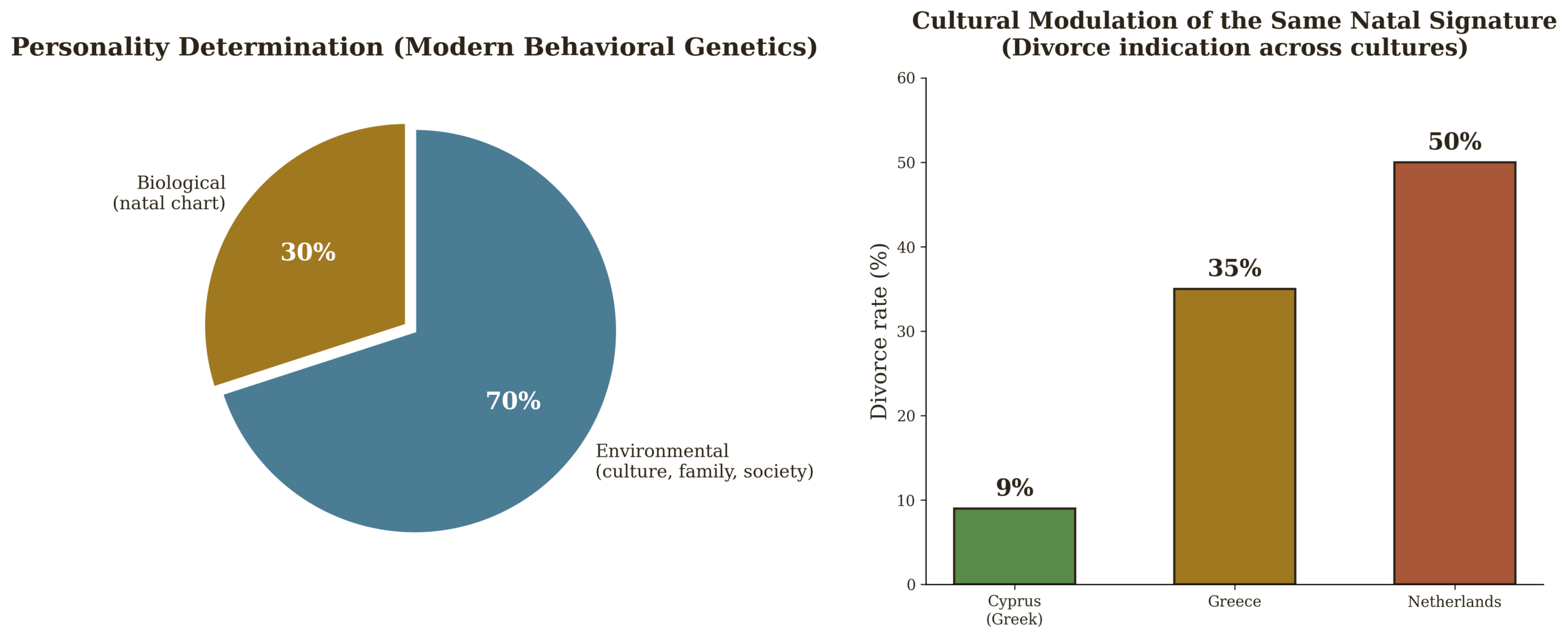
Figure 1. Behavioural-genetic determination of personality (~30% biological / ~70% environmental), and a cultural-modulation example: the same natal indication for marital instability expresses at vastly different rates (9% in Greek Cyprus, 35% in Greece, 50% in the Netherlands), demonstrating that identical natal signatures cannot be read in isolation from cultural context.
The figure illustrates a clinical observation that any practising astrologer learns quickly: the same natal signature for marital instability does not produce the same outcome in every culture. In Greek Cyprus, divorce rates are around 9%; in Greece, approximately 35%; in the Netherlands, around 50%. A reading that pronounces on the basis of natal indications alone, without modelling the cultural envelope, is structurally incomplete.
2.2 Huber Biological-Influence Zones
The Huber school of psychological astrology, developed by Bruno and Louise Huber (1980; see also Huber, Huber, & Huber, 2005), introduces a refinement that is essential to our framework. Within each 30° zodiac sign, the strength with which a planet expresses through biology varies systematically with degree position. Planets between approximately 5° and 17° are considered to express most strongly through inherited biological structure. Planets between 17° and 27° express with moderate biological strength. The first and final degrees of a sign (0°–4° and 27°–30°), the so-called aneretic degrees, show weak biological influence, and a planet placed there often expresses in a transitional or unstable way.

Figure 2. The Huber model of biological-influence zones within a single 30° sign. Planets in the 5°–17° band show the strongest biological signal; planets in the aneretic degrees (0°–5°, 27°–30°) often express transitionally or unstably.
This degree-position refinement explains a phenomenon long noted in the Hellenistic tradition: the last three degrees of any sign are considered “aneretic” and behave as if already partly belonging to the following sign, while the first three degrees show themes that arrive prematurely. For practitioners of horary astrology, this canon is operative. For natal work in a family-systems context, it allows the assessor to distinguish planets that carry strong heritable signal (and therefore mark transgenerational themes) from planets whose expression is more environmentally plastic.
2.3 The Concentric Layers of Influence
Building on the familiar personal-planet, social-planet and outer-planet classification, we read astrological influence as reaching the individual through five concentric layers. The innermost layer, the Ascendant, corresponds to the body and the embodied self. The personal planets (Mercury, Venus, Mars) describe individual identity and the capacity for relationship. The Sun, Moon and chart angles describe the family-system layer, that is, how the person is positioned within their primary social and emotional matrix. The social planets (Jupiter, Saturn) describe cultural and national context, the way the person engages with the institutions and norms of their society. The outermost layer, formed by Uranus, Neptune and Pluto, corresponds to what Jung and the Renaissance tradition called the anima mundi: the great transgenerational and historical currents that shape entire cohorts (see, e.g., Tarnas, 2006).
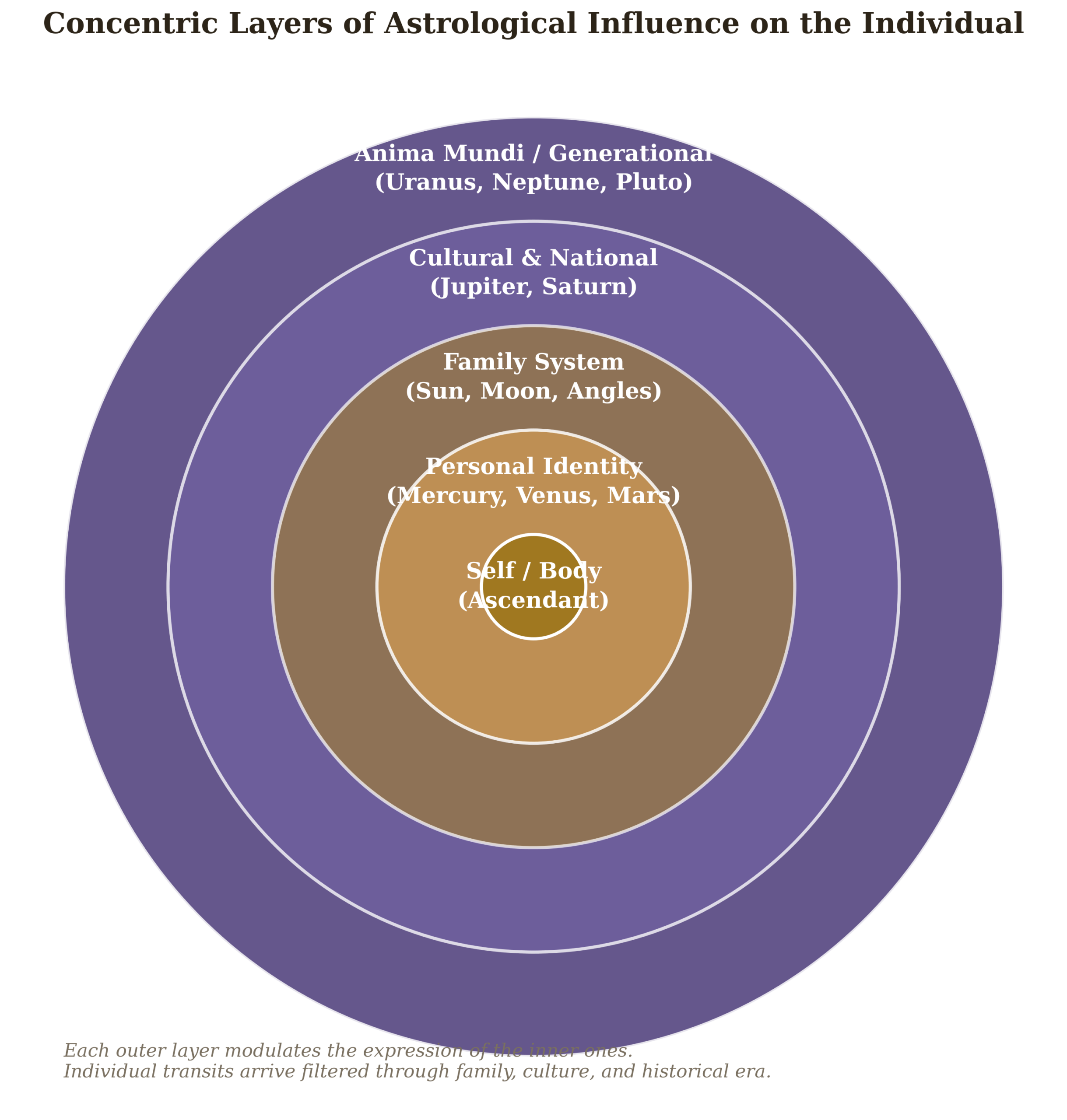
Figure 3. Concentric layers of astrological influence on the individual. Each outer layer modulates the expression of the inner ones: individual transits arrive filtered through family, culture, and historical era.
This has a practical consequence. When a transit from one of the outer planets touches a natal personal planet, its effect is rarely confined to the individual. The Saturn–Pluto conjunction in Capricorn in 2020 did not only activate the charts of those with personal planets in early cardinal signs. It coincided with a globally synchronous traumatic event, the COVID-19 pandemic, whose secondary effects, including educational lag, economic instability and generational anxiety, will shape the developmental trajectories of children for decades. The astrologer reading a chart from this generation must hold the personal, the family, the cultural, and the historical layers simultaneously.
2.4 The Anima Mundi and Transgenerational Memory
Psychological science has now shown that traumatic experience can leave epigenetic markers that pass across generations (Yehuda & Lehrner, 2018). Children and grandchildren of Holocaust survivors, for instance, show altered cortisol regulation and elevated rates of anxiety and depression, despite never having directly experienced the trauma themselves. Astrology, as we read it, has been describing the same phenomenon in symbolic vocabulary for centuries: ancestors do not disappear when they die; their unresolved themes recur in the descendants who share configurations with them.
In my own family, my grandfather was brutally killed by occupying forces in 1940s Greece. His children witnessed the act. That event never really became the past. It shaped the emotional climate of every household descended from him, including mine. The astrological signature of that wound is visible in the descendants who share natal configurations resonant with his chart.
The book-length development of these themes within astrology can be found in Sullivan (1995/2001), Brady (1998), and within depth psychology in Hellinger (1998) and the Jungian literature on the collective unconscious (Jung, 1959). Our contribution is methodological: a structured way of identifying which natal configurations carry which inherited content, and how to differentiate transmissible family material from individual potential.
In memoriam: Erin Sullivan (9 November 1947 – 11 December 2023), whose pioneering work on the astrology of family dynamics laid much of the foundation for this paper.
3. The Family Composite Chart
A standard natal chart describes a single person at a single moment. To assess a family system astrologically, we need a chart that describes the system as a whole. We use the composite (group derivative) method, which in Solar Fire is constructed as follows: load each family member’s natal chart; select Chart → Combined → Composite Group Derivative Ascendant. The resulting chart is the astrological signature of the family system itself, and can be compared with each individual’s natal chart in the same way that two individual charts are compared in synastry.
A specialised program, Jigsaw (version 2), automates the detection of shared aspects, midpoints, and configurations across a group of charts. For practitioners who lack access to either program, the composite chart can be approximated by hand by averaging the positions of all family members’ planets (the midpoint method).
Two things make the composite chart valuable in practice. It reveals the shared themes, the planets and configurations that are prominent in several family members at once and therefore likely to express across the whole system. And it shows where an individual chart conflicts with the family signature, the places where the role the system expects of a member clashes with that member’s own natal potential.
3.1 Reading the Composite: Outer Planets on the Angles
In our experience, the most diagnostically informative configurations in the family composite chart are outer planets in close aspect to the angles (Ascendant, Midheaven, Descendant, IC) or in tight aspect to each other.
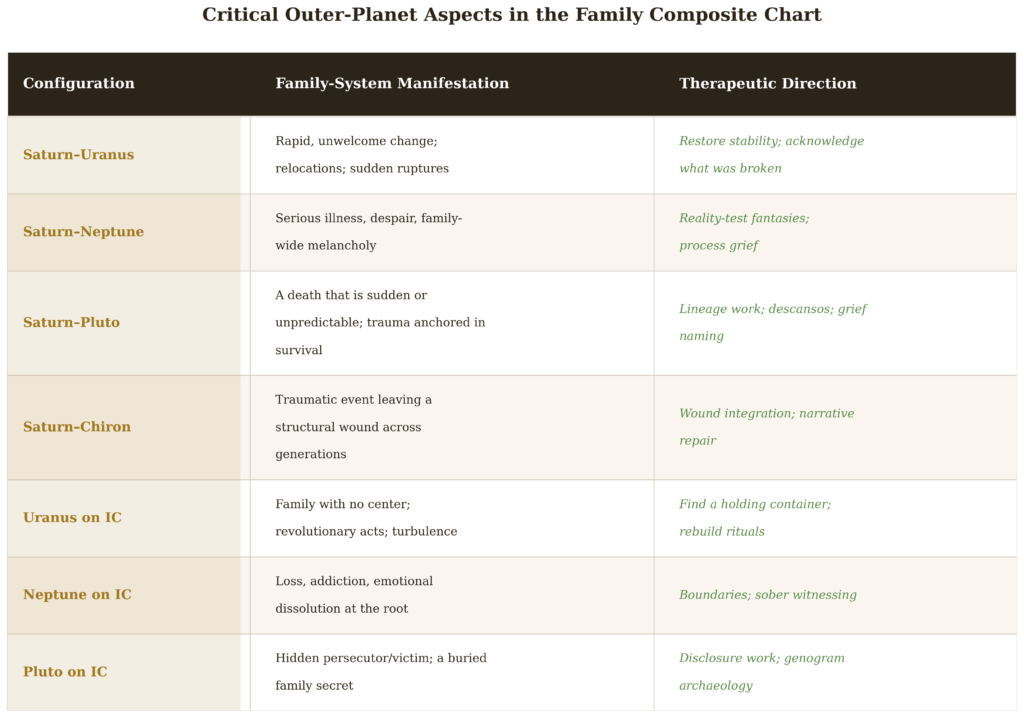
Figure 8. Critical outer-planet configurations in the family composite chart, their typical manifestations, and the recommended therapeutic direction. Each combination of slow-moving planets generates a distinctive family pattern requiring a specific clinical response.
A composite Pluto on the IC, for example, often points to a hidden family secret, usually a death, a persecution or some unspeakable act in an earlier generation, that organises the emotional life of the present generation without ever being named directly. Composite Uranus on the IC frequently indicates a family without a stable center: relocations, sudden ruptures, an inability to form the rituals and routines that stabilise emotional life. Composite Neptune on the IC indicates dissolution at the root: addiction, depression, emotional fog, the kind of family in which everyone is somehow not quite present.
Hard aspects between Saturn and the three transpersonal planets generate especially diagnostic combinations: Saturn–Uranus (sudden unwelcome rupture), Saturn–Neptune (chronic illness or melancholy), Saturn–Pluto (a death that re-organises everything), Saturn–Chiron (structural wound transmitted across generations). The practitioner reads these aspects not as prediction but as orientation: this is the field the family is working in.
4. A Nine-Role Typology of Family-System Positions
Synthesising material from systemic family therapy (Hellinger, 1998; Boszormenyi-Nagy & Spark, 1973), Bowen family-systems theory (Bowen, 1978), and our own clinical observations, we identify nine positions that recurrently emerge in pathological family systems. Each position has a characteristic astrological signature, summarised in Figure 4.
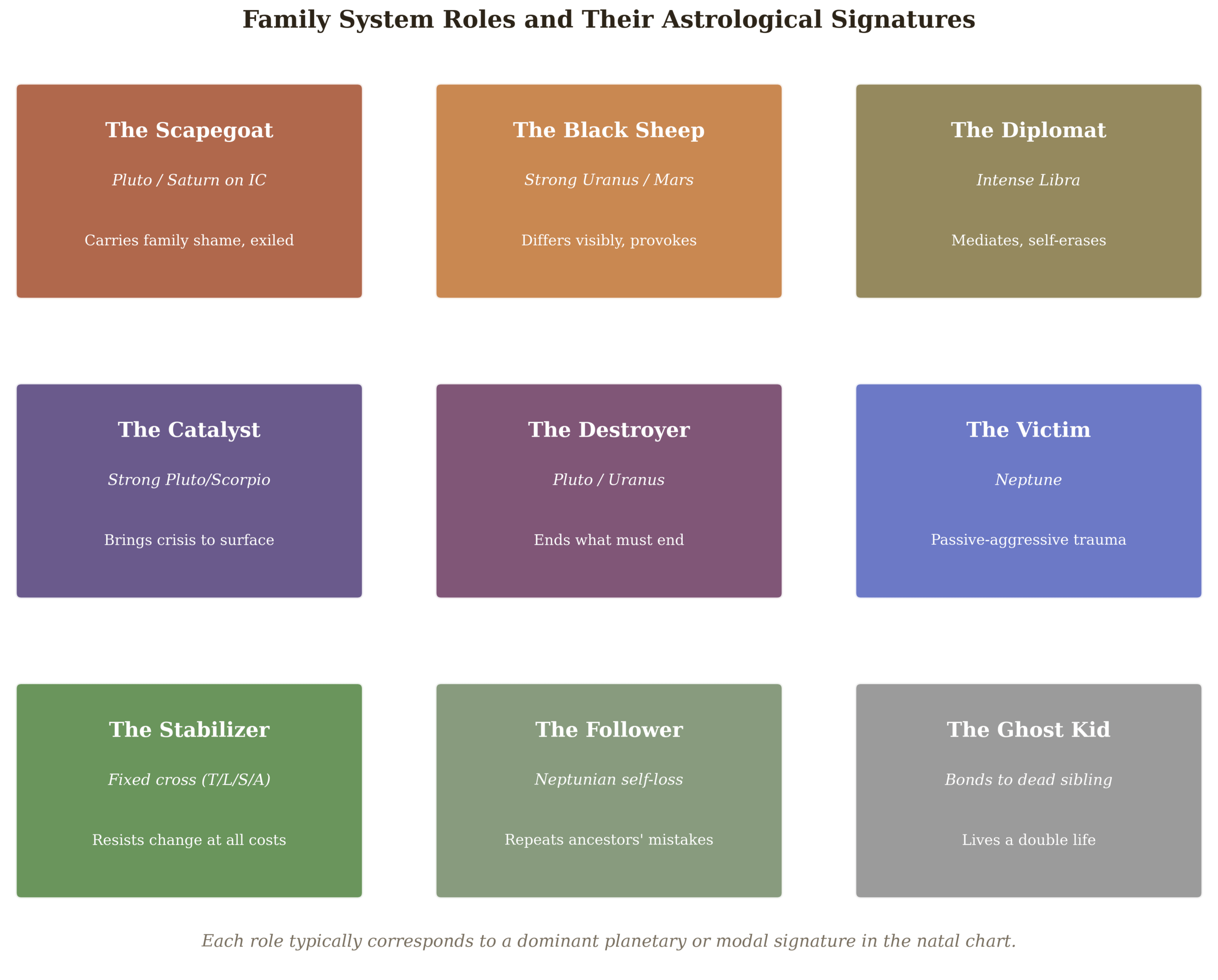
Figure 4. Nine roles in pathological family systems and their characteristic astrological signatures. Each role typically corresponds to a dominant planetary or modal signature in the individual’s natal chart, modulated by the family composite chart.
4.1 The Scapegoat
The scapegoat is the family member who carries, usually without knowing it, the shame, anger or grief that the rest of the system cannot face. Astrologically, the scapegoat is most often identifiable by Pluto or Saturn in conjunction with the family composite IC, or by a natal chart whose IC is in tight aspect to the family composite’s Pluto. The Hellinger family-constellation tradition stresses that the scapegoat heals only when the system explicitly says, in effect, “you belong,” a sentence that finally names what had been silently denied.
4.2 The Black Sheep
The black sheep is the family member who differs visibly and refuses to be assimilated. The astrological marker is a strong, often afflicted Uranus, frequently in hard aspect to the Sun, Moon, or Mercury; alternatively, a Mars whose energy cannot be channelled into the family’s acceptable forms. The black sheep is not pathological in itself. Many families need one to break patterns that have hardened over time. The trouble starts when the system cannot tolerate the difference, and the black sheep becomes the place where all the conflict collects.
4.3 The Diplomat
The diplomat is the family member who manages every conflict by mediating, smoothing, and ultimately erasing their own position. The astrological marker is a strongly placed Libra, most easily spotted on the AstroDynes report, where Libra scores high but with a negative harmony value. The diplomat’s difficulty is not the mediation itself but the self-erasure it conceals: a person who has trained themselves out of having needs in order to maintain the illusion of family harmony.
4.4 The Catalyst
The catalyst is the family member whose presence forces the system to confront what it has been avoiding. Strong Pluto, strong Scorpio, or sometimes an unexpected (unaspected) Pluto are typical signatures. Catalysts are not antagonists; they are the structural element that introduces enough disruption for repair to become possible. When the catalyst’s natal chart shows positive astrodyne values for Pluto/Scorpio, the catalysing function tends to be constructive. When the values are negative, the catalyst may simply be wounded and acting out unprocessed trauma, in which case it is the catalyst, not the family, who is the patient.
4.5 The Destroyer
The destroyer is the family member whose action ends something that needed to end, whether a marriage, a business, a denial or a generational pattern. Strong Pluto and Uranus are typical markers. Like the catalyst, the destroyer is not intrinsically pathological. The astrologer’s task is to distinguish constructive destruction (the closing of what has run its course) from the compulsive, undiscriminating destruction that signals unprocessed Uranian or Plutonian energy.
4.6 The Victim
The victim is the family member who has organised their identity around having been harmed. Neptune is the predominant marker, often in hard aspect to the Sun, Moon, or Ascendant. Critically, the victim is rarely simply passive: the trauma that organises the victim position frequently produces passive-aggressive behaviour, with anger turned sideways rather than forward. One clinical observation recurs. Clients in the victim position often carry a secondary trauma, a real wound such as rape, abuse or abandonment, that was culturally unspeakable and so accumulated decades of unmetabolised charge.
4.7 The Stabilizer
The stabilizer is the family member whose presence holds the system in its current configuration, whether the configuration is functional or pathological. The astrological signature is a dominant fixed cross, with strong Taurus, Leo, Scorpio or Aquarius, and often the angles in fixed signs too. Stabilizers oppose change because change itself is what they cannot tolerate; their value to the system is real (someone has to hold the form), but they often need permission to allow controlled transformation.
4.8 The Follower
Hellinger’s concept of “the following” describes the family member who, unconsciously, repeats the unresolved destiny of an ancestor. The astrological marker is usually a Neptunian configuration, Neptune on the Ascendant or in hard aspect to the Sun or Moon, combined with retrograde planets that point to unresolved lineage material. Followers often present with self-destructive behaviours (addiction, accident-proneness, self-sabotage) that, when traced back, repeat the trajectory of a relative one or more generations removed.
4.9 The Ghost Kid
The ghost kid is the child born after the death of a sibling, who is expected, openly or silently, to live both their own life and the unlived life of the one who died. The signature has two parts: a natal chart whose key planets contact the deceased sibling’s chart in identity-marking ways (Sun to Sun, Moon to Moon, Ascendant to Ascendant), and a family composite that still holds the dead child as an unintegrated presence. Where the conception chart is known, the prenatal influence of the parents’ grief is often clearly legible.
These nine roles are not mutually exclusive: a single individual may carry several at once, and roles shift across the lifespan. The astrological framework provides a structured way of recognising which role(s) the client is occupying, which configurations support continued occupation, and which configurations point toward potential exit routes.
5. The Diagnostic Toolkit
Beyond the typology of roles, the framework rests on a structured set of technical markers. We present these in three groups: positive markers (configurations that indicate active themes), conditional markers (configurations whose meaning depends on context), and negative-space markers (the diagnostically meaningful absence of configurations).
5.1 The Leading Planet and Astrodyne Scoring
The leading planet is the planet with the highest score on the Astrodyne report (in Solar Fire: Reports → Tabulations → AstroDyne Plan and Asp). It identifies the principal energy organising the chart. Within a family-systems reading, the leading planet of the composite chart typically describes the dominant theme of the family-as-system; the leading planet of the individual chart describes the dominant theme of the individual’s position within it.
Three modifications of the leading planet are diagnostically critical. If the leading planet is retrograde, the family system is fundamentally backward-facing, and its dominant theme has unfinished business in the past, often across several generations. Second, if the leading planet is combust (within 8.5° of the Sun without “Rhetorius protection” through essential dignity), it is consumed by the ego or by the family’s public identity and unable to express in its own voice. Third, if the leading planet scores essentially or accidentally weak (low dignity), the family’s dominant theme is structurally compromised at its source.
5.2 The Huber Points: Cusp, Balance, Low Point
Within the Koch house system used by the Huber school, every house contains three distinct points where the environmental influence on a planet changes structurally. The cusp (the start of the house) is the external point: planets here are strongly activated by the environment and the family typically demands that they be lived out. The balance point, about a third of the way through the house, is a zone of equilibrium where the environment neither demands the planet nor suppresses it. The low point, roughly two-thirds of the way through, is where the environment takes no interest in the planet at all, and its potential goes unrecognised.
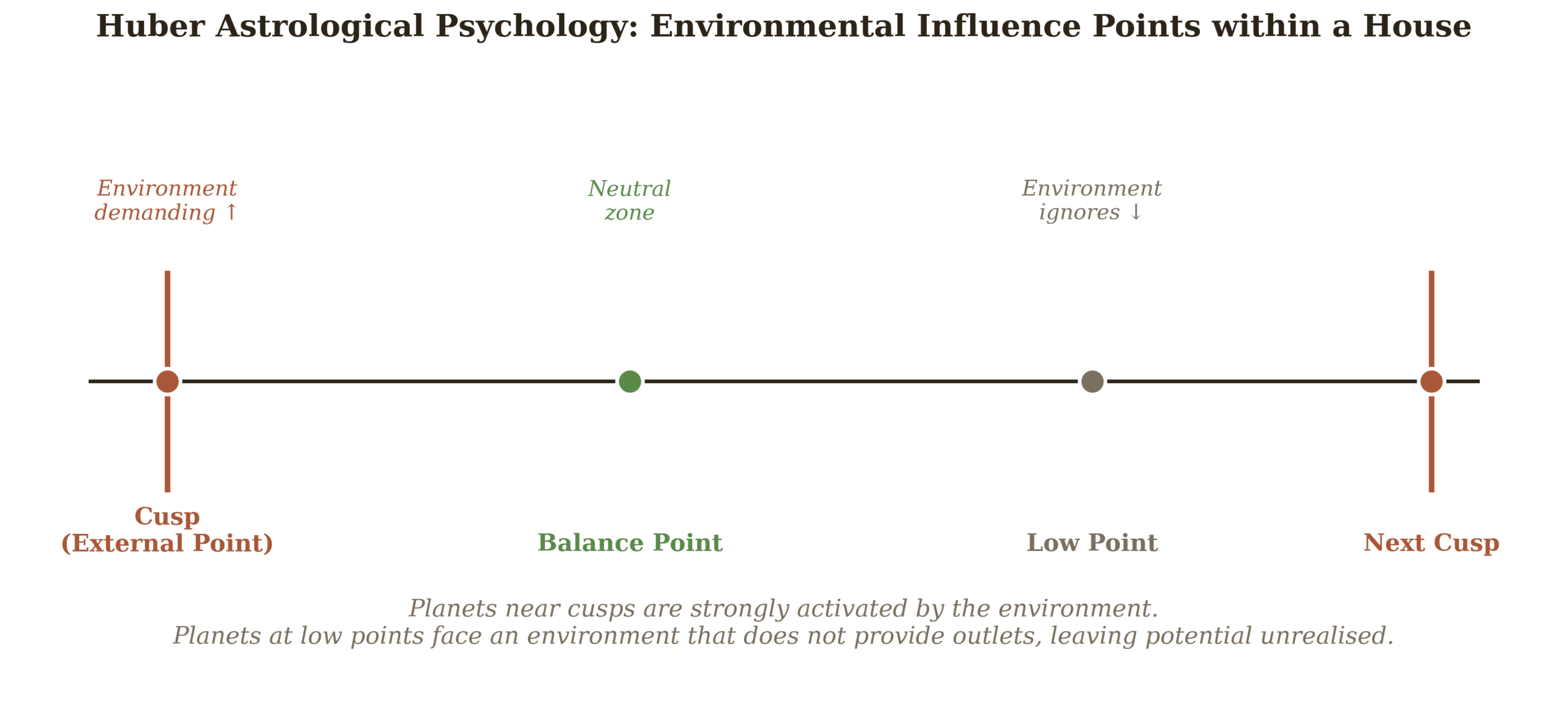
Figure 10. The three environmental-influence points within a Huber/Koch house. Planets near cusps are strongly activated by environment; planets at low points face an environment that does not provide outlets, leading to internalised potential or unmet capacity.
A planet at the low point of a house may be intrinsically strong (in its sign of dignity, well-aspected, with high astrodyne score) and yet remain dormant throughout the lifespan because the environment offers no occasion for its expression. A weak planet at the cusp, by contrast, will be forced into expression by environmental pressure, sometimes traumatically. The Huber model gives the astrologer a vocabulary for the gap between potential and expression that families and clients otherwise describe only intuitively.
5.3 Out-of-Bounds and Eclipse Conditions
The longitudinal zodiac (the standard ecliptic) is only one of two coordinate systems relevant to a chart. The declinational dimension, the latitude of each body above or below the celestial equator, adds a second, often overlooked layer of meaning. Bodies whose declination exceeds approximately 23.5° (the limit of the Sun’s declination) are termed out-of-bounds (OOB). We refer to them informally as Luciferian planets, after the mythological figure who acts outside the order.
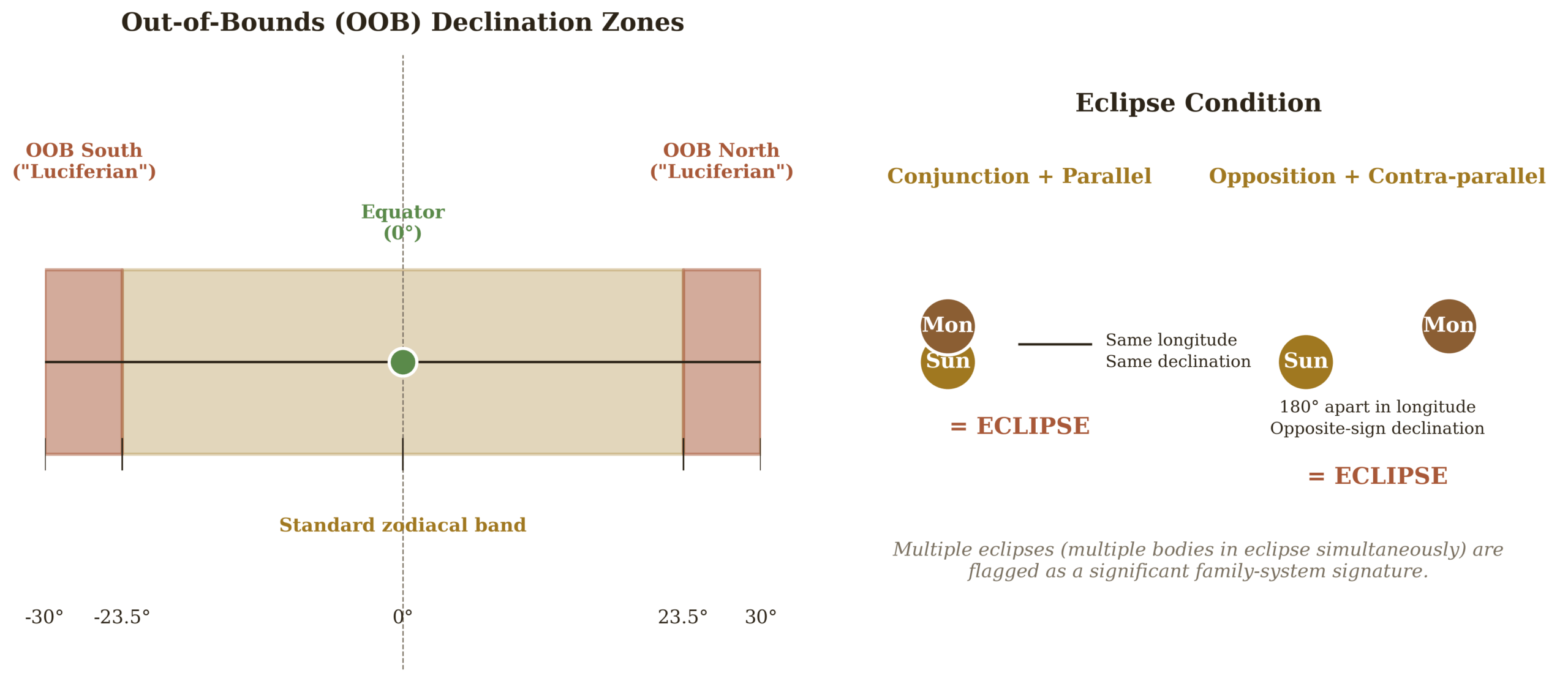
Figure 11. Left: out-of-bounds zones in declination, indicating planets that express in an extreme, “out-of-order” mode often associated with revolt against the family system. Right: eclipse conditions, combinations of longitudinal conjunction or opposition with declinational parallel or contraparallel, that intensify a configuration’s significance.
Out-of-bounds planets indicate themes that resist normalisation. In family-systems work, they frequently mark the individual’s point of revolt against the family’s expected order. Gibson (1995), writing as a clinical psychiatrist, built a systematic body of evidence linking declinational configurations, among them binary eclipses, out-of-bounds planets and what he calls Hidek positions, to specific psychiatric presentations. His work is one of the few quantitative bridges between modern astrology and clinical mental-health research. His framework directly informs the declinational layer of the assessment workflow presented here.
Eclipse conditions occur when a body in longitudinal conjunction is also in declinational parallel with another body (or in longitudinal opposition combined with contraparallel). Gibson (1995) calls these doubled connections binary eclipses, and they concentrate astrological meaning in a diagnostically useful way. When they appear in a family composite chart, they usually mark themes that several synchronicities have amplified into events the family could not ignore. Three or more bodies in eclipse condition at once, a multiple eclipse, count as a major family-system signature. Bodies with extreme declination beyond the standard zodiacal band, what Gibson calls Hidek positions, tend to carry an intensified and sometimes pathological version of their natal themes.
5.4 Unaspected Planets and Yods
Hamaker-Zondag (2000), in her book on Yods and unaspected planets, makes the case that unaspected planets are family-system signatures in their purest form: they describe themes the family was unable to integrate, leaving the descendant carrying the unprocessed content. Our clinical observation supports this view. When a client presents an unaspected planet, we routinely investigate whether the same planetary theme was suppressed, denied, or never named in previous generations.
The Yod, a configuration in which two quincunxes (150° aspects) meet at a single apex planet, has a similar diagnostic profile. The apex of the Yod almost always describes a family problem the system has been unable to solve and which the client has inherited as their characteristic existential question. Yods, in our framework, are read primarily as family-systems markers rather than as karmic indicators.
5.5 Negative-Space Markers
Perhaps the most overlooked dimension of astrological assessment is what is absent from a chart rather than what is present. We routinely attend to four categories of absence.
Missing element: A family composite chart lacking earth is a family without grounding; a chart lacking water is a family with no emotional vocabulary; a chart lacking fire is a family without will. The absence is as diagnostic as the presence.
Missing aspect type: A chart lacking quincunxes, an aspect usually read as difficult, actually points to a system that cannot accept endings. Members of such a family cannot let things finish. They keep dead arrangements alive.
Empty longitude band: The Babylonian tradition divides each sign into three nine-degree bands corresponding roughly to the three thirds of life. A family chart with no planets in the 0°–9° band of any sign suggests difficulty with first-third life themes (early identity formation, education, attachment); empty 10°–19° bands point to mid-life themes; empty 20°–29° bands to late-life and legacy themes.
Generational gaps: A pattern in which an entire generation produces no descendants, say three siblings none of whom have children, frequently signals what we call family suicide: an unconscious systemic choice to end the lineage rather than continue to carry unprocessed material.
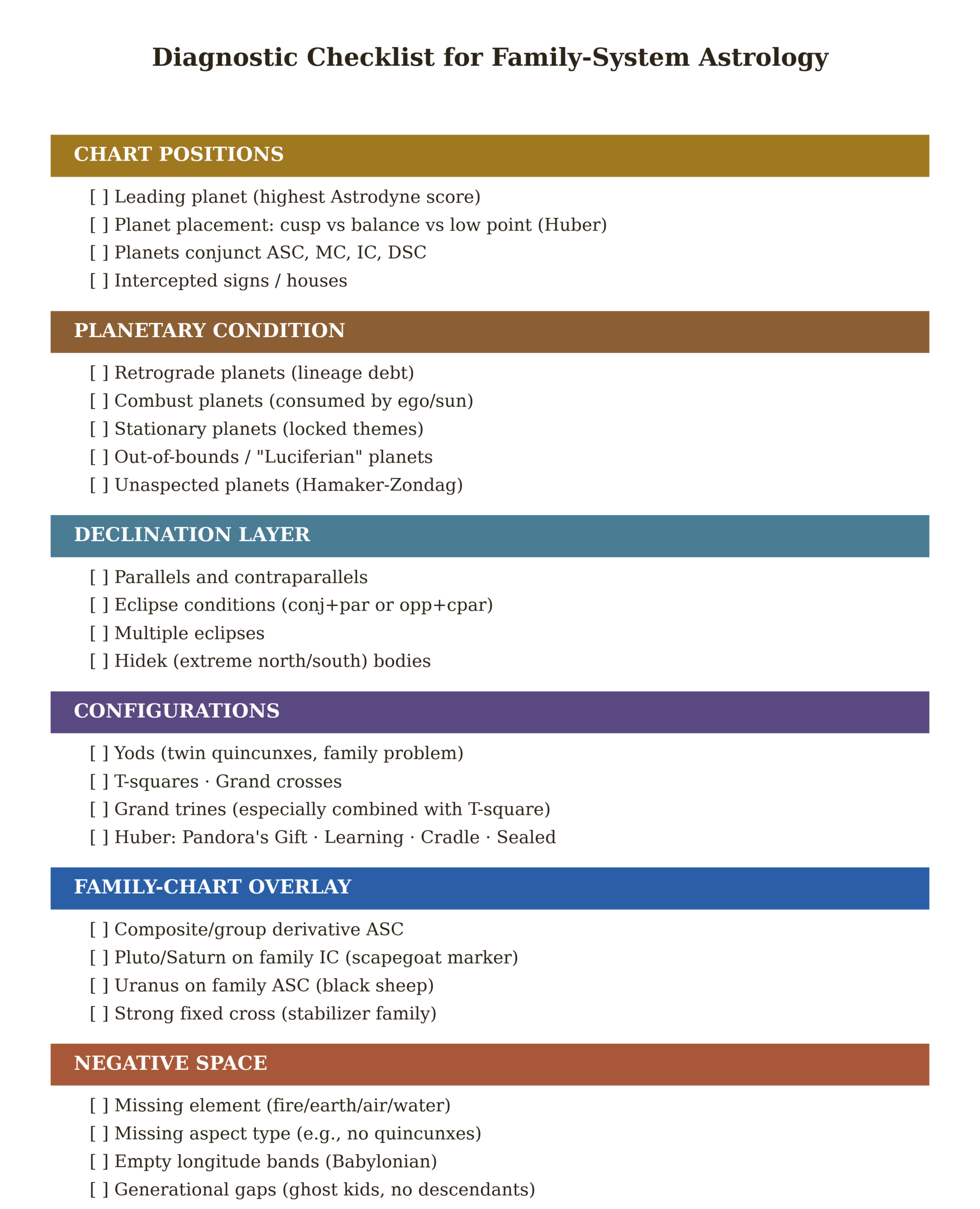
Figure 12. The full diagnostic checklist for family-system astrology, organised into six categories: chart positions, planetary condition, declination layer, configurations, family-chart overlay, and negative space.
6. Special Configurations
6.1 The Triangle of Perversion
The triangle of perversion is a structural pathology in which two members of the same generation form an unspoken alliance against a third member, typically of a different generation. The dynamic is rarely overt; it operates through indirect speech, subtle exclusion, and the manufacturing of consensus around the target’s supposed deficiencies.
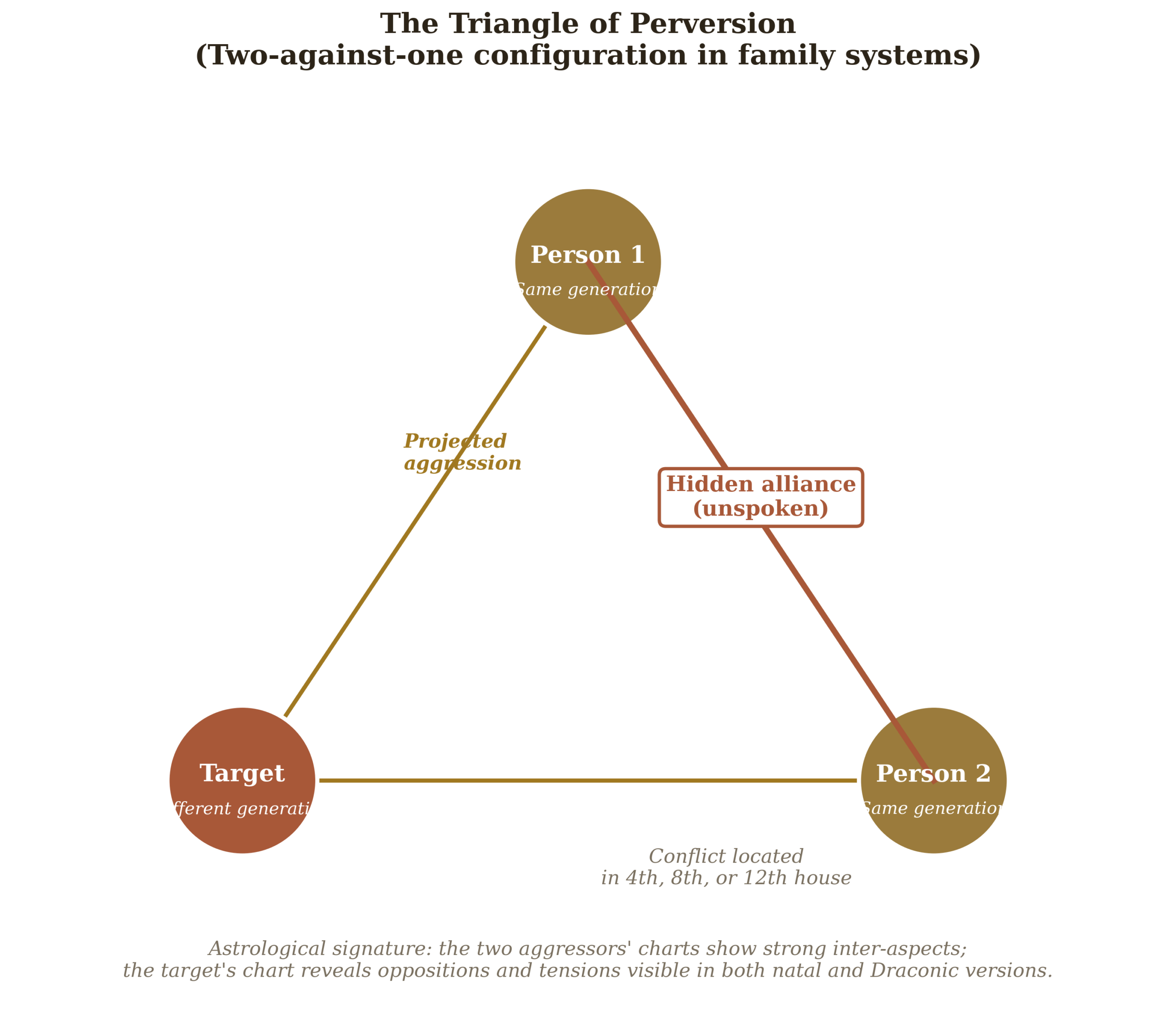
Figure 5. The triangle of perversion. Two members of the same generation form a hidden alliance and project shared aggression onto a third member of a different generation. The conflict, by nature, is rarely visible in the chart’s public houses (1st, 7th) and is instead located in the deeper houses (4th, 8th, 12th).
Astrologically, the triangle of perversion has a characteristic signature. The two aggressors’ charts typically show strong, often hard, inter-aspects with each other (suggesting alliance), and both show oppositions or tense aspects with the target. These tensions sharpen in the Draconic chart, a variant in which the North Node is reset to 0° Aries and every longitude is transformed accordingly. The Draconic version reveals what the family is karmically or systemically demanding of each member, and the divergence between natal and Draconic configurations in the target chart frequently makes the family’s implicit “assignment” of the target role visible.
6.2 The Prenatal Chart
The prenatal chart, calculated for the moment of conception where this is known, describes the in-utero astrological environment. Alice Bailey (1951) emphasised the chart’s diagnostic value; we have found it indispensable in cases where the mother’s emotional state during pregnancy is clinically relevant, which is to say, very often. Contemporary developmental science confirms that maternal stress during pregnancy elevates the risk of anxiety disorders in the child (O’Donnell et al., 2009; Glover et al., 2018). The prenatal chart describes, symbolically, the field within which this elevation took place.
6.3 The Ghost Kid and Generational Replacement
Returning to the role identified in §4.9: the ghost kid presents one of the clearest examples of transgenerational transmission. A child born after the death of a sibling, often named for the one who died or born close to that sibling’s birth or death date, typically carries an unspoken family commission: to live the unlived life of the dead. The ghost kid’s natal chart often echoes the deceased sibling’s in striking ways, with similar Sun-Moon contacts, similar angles and sometimes identical degree positions of the inner planets.
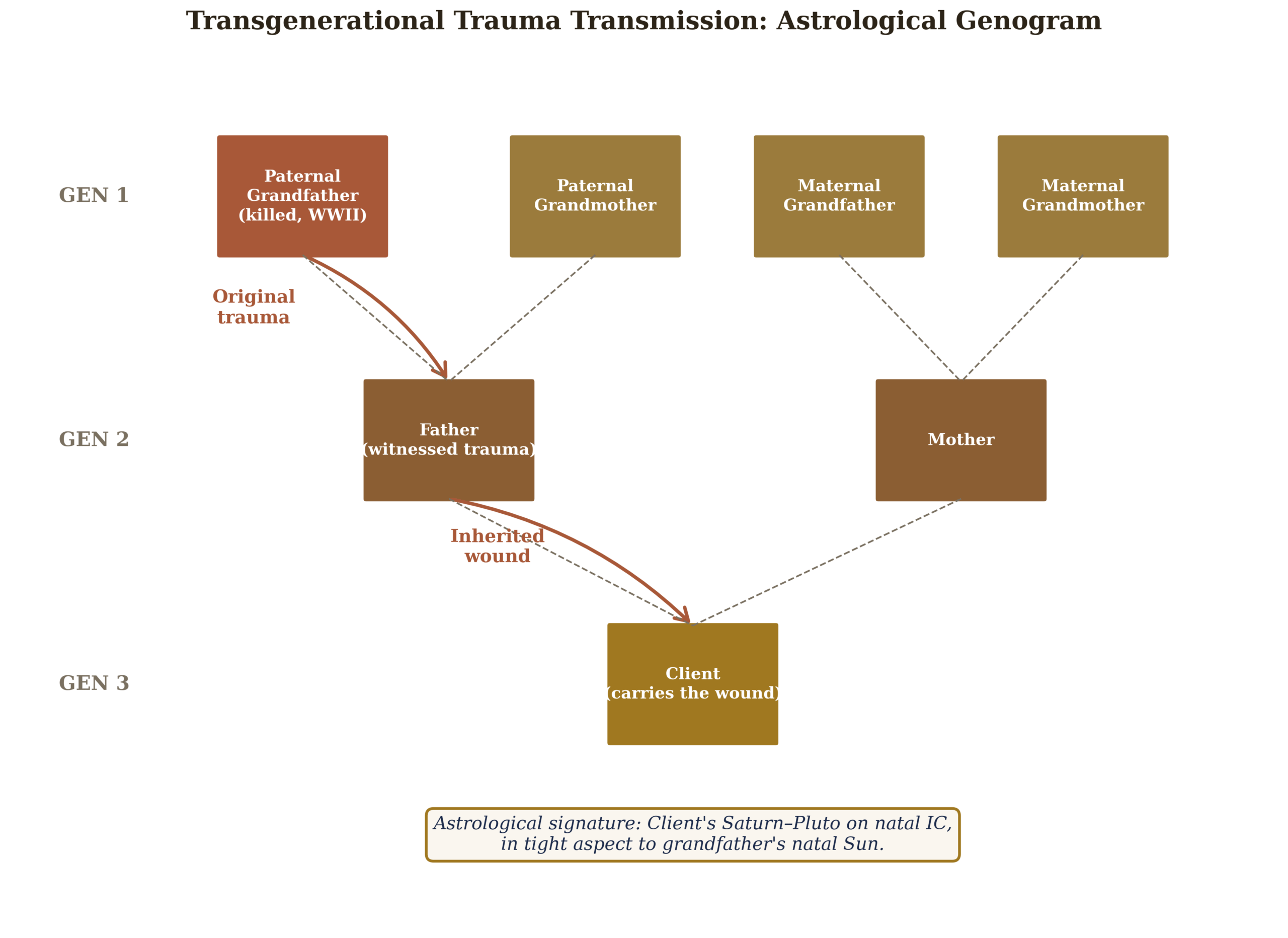
Figure 9. An astrological genogram illustrating transgenerational trauma transmission. The grandfather’s wartime trauma propagates through the father’s witnessing and arrives at the client as inherited material visible in the natal chart’s IC configuration.
The clinical task with ghost kids is not to “free” them from the deceased sibling, since that bond is real and often loving, but to make the unconscious commission conscious and to give the client explicit permission to live their own life while still carrying the memory.
6.4 Family-System Signatures by Dominant Sign
Family composite charts with a dominant zodiacal emphasis often display characteristic patterns. We summarise these in Figure 7.
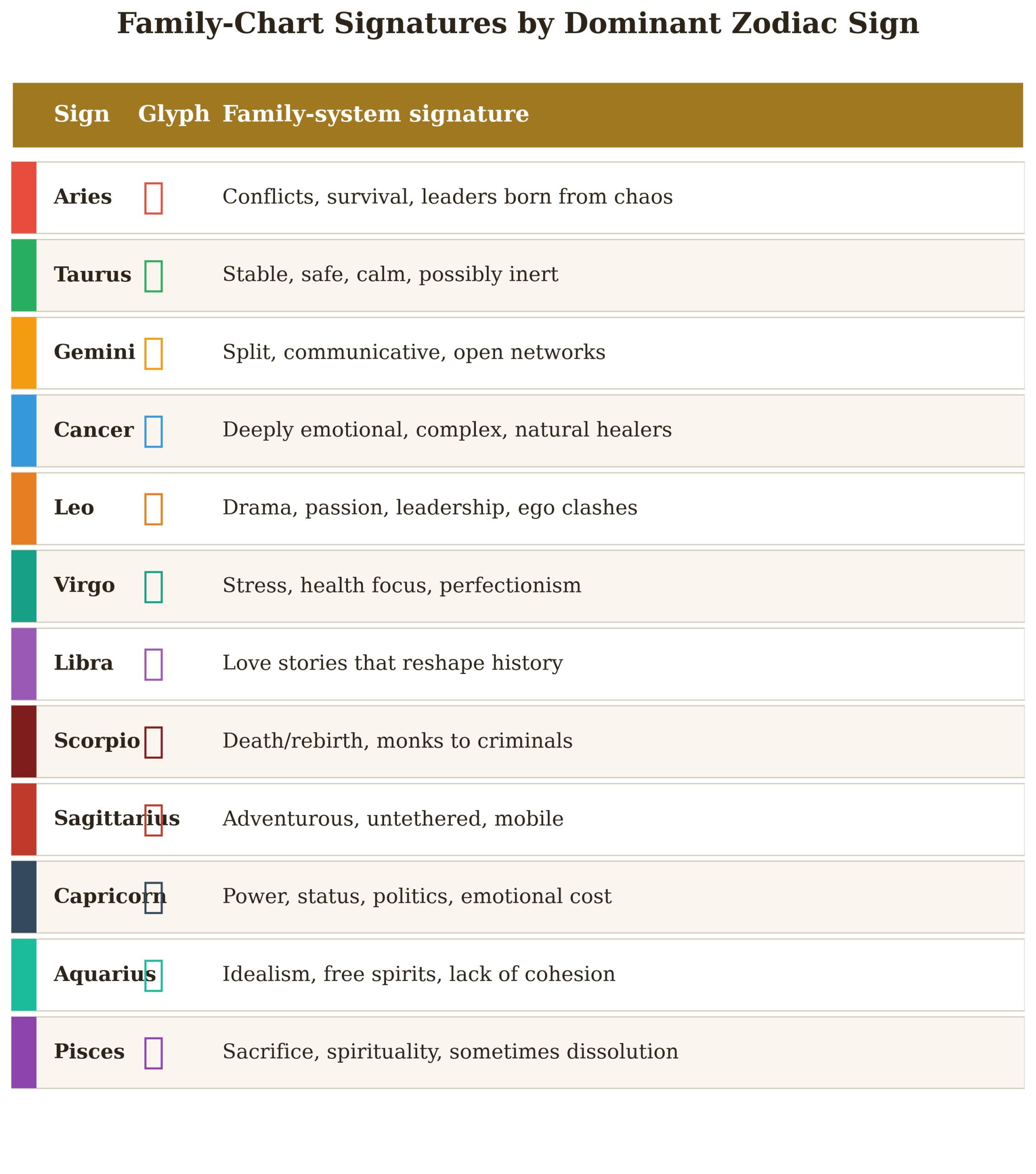
Figure 7. Typical family-system manifestations by dominant zodiac sign in the composite chart. These are clinical regularities, not deterministic predictions, and are best read in conjunction with cultural and historical context (Sullivan, E. 2007)
7. A Structured Clinical Workflow
The framework consolidates into the workflow shown in Figure 6. Client intake gathers the full natal data alongside a three-generation genogram. Three chart workups are then produced in parallel: the client’s individual natal chart for a personal baseline, the family composite chart for systemic patterns, and, where conception data is available, the prenatal chart for the in-utero signature.
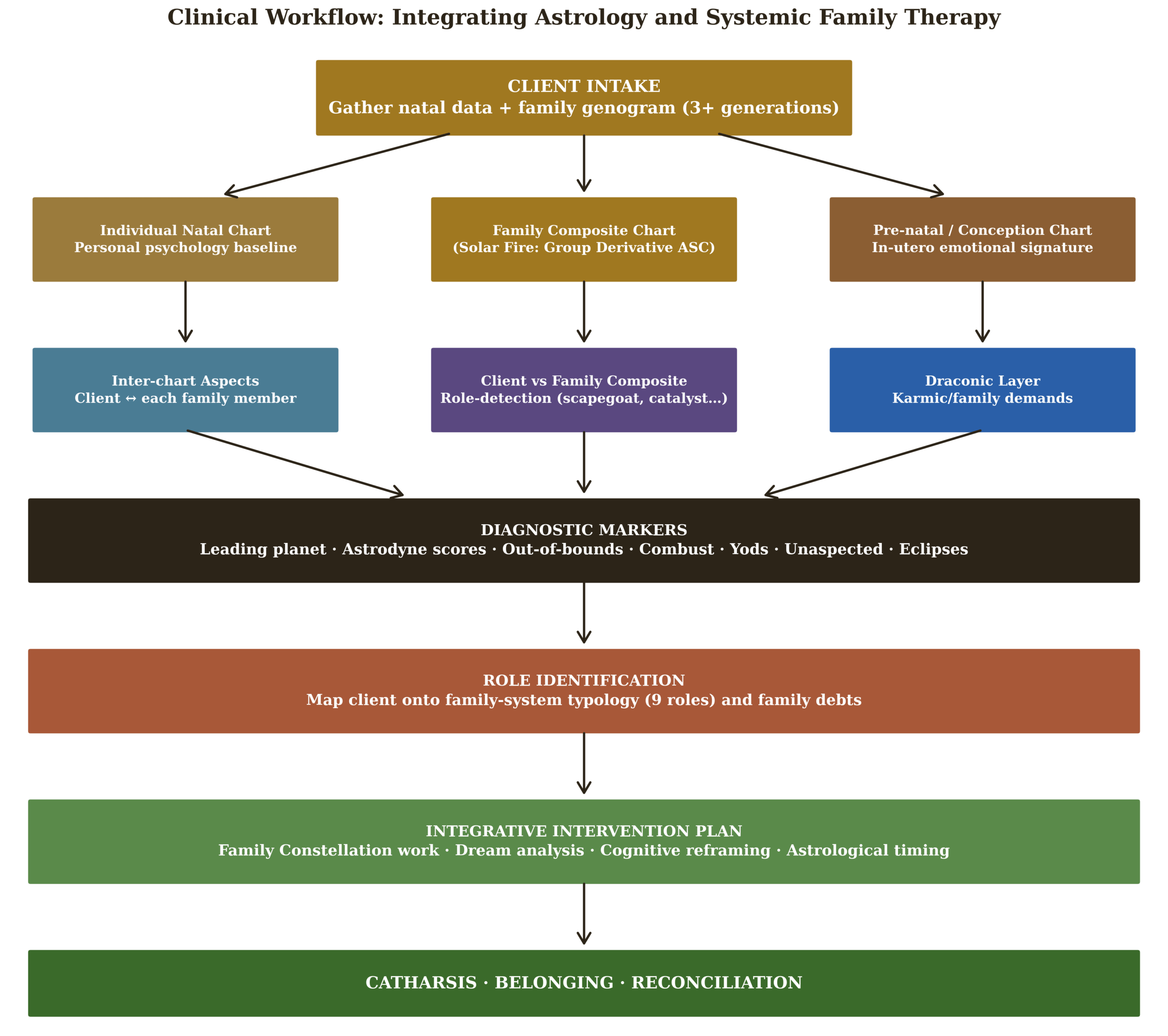
Figure 6. The integrated clinical workflow combining astrological assessment with systemic family therapy. The workflow proceeds from intake through three parallel chart workups, comparison analyses (inter-chart, role detection, Draconic), diagnostic-marker identification, role mapping, and finally an integrative intervention plan oriented toward catharsis, belonging, and reconciliation.
Three comparison analyses follow. Inter-chart aspects between the client and each family member pinpoint the synastric contacts, usually the places of mutual activation, attraction or friction. Comparison of the client’s natal chart with the family composite chart identifies the client’s role within the system. The Draconic layer reveals the unconscious karmic or systemic demands the family places on the client.
The diagnostic-markers stage applies the full toolkit from §5: leading planet, Huber points, out-of-bounds and eclipse conditions, unaspected planets, Yods, configurations, and negative-space markers. These are integrated to identify the client’s role(s) from the typology in §4. Only after this analytic work is complete does the intervention plan crystallise.
The intervention plan typically combines several modalities. Family Constellation work (Hellinger, 1998) addresses the systemic configuration directly through experiential representation. Dream analysis, drawing on both the Freudian (Freud, 1900) and Jungian (Jung, 1934/1981) traditions, reaches unconscious material in the form in which it presents itself spontaneously. Cognitive reframing addresses the conscious meaning-making layer. Astrological timing locates the moments at which transits and progressions support specific interventions.
The therapeutic ends toward which the workflow orients are three: catharsis (the discharge of accumulated unprocessed affect), belonging (the explicit therapeutic act of restoring the excluded or scapegoated member to the system), and reconciliation (the establishment of right relationship across the generations). These are Hellinger’s ends as much as our own; the astrological assessment is offered as a structured route to them rather than as a substitute for them.
8. Discussion and Limitations
Several limitations of the framework merit explicit acknowledgement. First, the cultural envelope is real: identical astrological signatures express differently across cultures, and the practitioner must hold the natal indication and the cultural matrix together at every point. A reading that pronounces on the basis of the chart alone, without modelling the social and historical context, is structurally incomplete.
Second, the framework presupposes accurate natal data. Where birth times are uncertain or unknown, which is a frequent practical limitation, the reading of the angles, the Moon’s sign and aspects, and the house placements becomes approximate. The practitioner should be transparent with the client about the resulting uncertainty.
Third, the framework is symbolic, not predictive. We do not claim that the natal chart determines outcomes; we claim that it describes patterns of potential expression that, when read in conjunction with environmental and cultural context, illuminate dynamics that other diagnostic methods miss. The therapeutic value of the framework lies in the depth of the symbolic vocabulary it provides for naming experiences that are otherwise unnameable.
Fourth, the practitioner’s own positioning matters. Astrology in the service of family-systems work is not value-neutral; the practitioner brings assumptions about what constitutes health, belonging, and resolution. Our framework explicitly affirms a non-pathologising orientation: the scapegoat, the black sheep, and the catalyst are not patients to be cured but family members whose differentiation has been mishandled by the system. The therapeutic act is to restore the system’s capacity to hold the differentiation, not to dissolve it.
Finally, the integration of astrology with the social and noetic sciences, which is the central project of the CCONOSS Research Center that the author currently leads, is still ongoing. The framework presented here is offered as a contribution to that project rather than as its conclusion. Future work will extend the framework with quantitative validation against case outcomes, integration with cosmophysiological data on solar and geomagnetic activity, and development of structured assessment instruments suitable for clinical research.
9. Conclusion
We have presented a framework for using astrology as a structured diagnostic and therapeutic adjunct in the assessment of family-system dynamics. The framework integrates Hellenistic, traditional, and Huber astrological methodologies with contemporary systemic family therapy and depth psychology. Its central claim is that the dynamics most resistant to conventional therapeutic intervention, such as transgenerational trauma, scapegoating, blind loyalties and family debts, are often legible in the natal and composite charts of family members, and that reading these patterns in the chart can accelerate and deepen therapeutic work carried out through other methods.
The diagnostic toolkit (§5) and the clinical workflow (§7) are offered to practitioners as practical instruments. The nine-role typology (§4) is offered as a vocabulary for naming the positions clients occupy. The theoretical foundations (§2) and the family-chart method (§3) provide the structural support on which the entire framework rests.
Astrology, on this view, is not in competition with psychology, psychiatry, or family therapy. It is a parallel symbolic technology, ancient and refined, that addresses the same human realities through a different vocabulary, and its distinctive contribution is a sensitivity to the transgenerational and cosmic-historical layers that conventional clinical methods reach only with difficulty. The work of bringing astrology into responsible dialogue with the human sciences is a generational project. This paper is a contribution to that project from within the practitioner tradition.
The family is the system within which we are made; it is the system through which we are wounded; and it is the system in which, when the work goes well, we are finally received. The chart is one of the maps to that reception.
References
Bailey, A. A. (1951). Esoteric Astrology. Lucis Publishing Company.
Boszormenyi-Nagy, I., & Spark, G. M. (1973). Invisible Loyalties: Reciprocity in Intergenerational Family Therapy. Harper & Row.
Bowen, M. (1978). Family Therapy in Clinical Practice. Jason Aronson.
Brady, B. (1998). Brady’s Book of Fixed Stars. Samuel Weiser.
Freud, S. (1900). The Interpretation of Dreams. (Standard Edition, Vol. 4–5).
Freud, S. (1930). Civilization and Its Discontents. (Standard Edition, Vol. 21).
Gibson, M. E. (1995). Signs of Mental Illness: An Astrological and Psychiatric Breakthrough. Llewellyn Publications.
Glover, V., O’Donnell, K. J., O’Connor, T. G., & Fisher, J. (2018). Prenatal maternal stress, fetal programming, and mechanisms underlying later psychopathology: a global perspective. Development and Psychopathology, 30(3), 843–854.
Hamaker-Zondag, K. (2000). The Yod Book: Including a Complete Discussion of Unaspected Planets. Samuel Weiser.
Hellinger, B. (1998). Love’s Hidden Symmetry: What Makes Love Work in Relationships. Zeig, Tucker & Theisen.
Huber, B., & Huber, L. (1980). Astrological Psychosynthesis: The Astrological Diagram for the Use of Psychological Counseling. API.
Huber, B., Huber, L., & Huber, M. (2005). Aspect Pattern Astrology: A New Holistic Horoscope Interpretation Method. HopeWell Publications.
Jung, C. G. (1934/1981). The Archetypes and the Collective Unconscious (Collected Works, Vol. 9, Part 1). Princeton University Press.
Jung, C. G. (1959). Aion: Researches into the Phenomenology of the Self (Collected Works, Vol. 9, Part 2). Princeton University Press.
Knopik, V. S., Neiderhiser, J. M., DeFries, J. C., & Plomin, R. (2016). Behavioral Genetics (7th ed.). Worth Publishers.
Nelson, R. D. (2019). Connected: The Emergence of Global Consciousness. ICRL Press.
O’Donnell, K., O’Connor, T. G., & Glover, V. (2009). Prenatal stress and neurodevelopment of the child: Focus on the HPA axis and role of the placenta. Developmental Neuroscience, 31(4), 285–292.
Polderman, T. J. C., Benyamin, B., de Leeuw, C. A., et al. (2015). Meta-analysis of the heritability of human traits based on fifty years of twin studies. Nature Genetics, 47(7), 702–709.
Sullivan, E. (1995). Dynasty: The Astrology of Family Dynamics. Arkana (Penguin). [Republished 2001 by Samuel Weiser as The Astrology of Family Dynamics.] In memoriam: Erin Sullivan (1947–2023).
Tarnas, R. (2006). Cosmos and Psyche: Intimations of a New World View. Viking.
Yehuda, R., & Lehrner, A. (2018). Intergenerational transmission of trauma effects: Putative role of epigenetic mechanisms. World Psychiatry, 17(3), 243–257.
About the Author
Christos Archos is a professional astrologer and psychologist with over 23 years of practice and 31 years of astrological study. He is the founder and director of the Astrology Institute (astroinstitute.gr), the first astrology school worldwide to operate its own dedicated AI research division, and the founder of the Mediterranean and Balkan Institute for Astrological Research.
His original methodological contributions to astrological practice include the Triangular Analysis technique (2016), the Eosphoric Dimension (a coordinate system using the LED declination signal as a hidden astrological dimension), In-Depth Astrological Dream Analysis (IDADA), the Shadow Method (mapping traumatic events to natal configurations), and the 3-Year Blueprint approach for early-childhood analysis.
Christos Archos has lectured at ISAR, OPA, the Astrological Lodge of London, AFAN, the European Astrology Conference, and major conferences on four continents. His work has appeared in The Mountain Astrologer, ISAR Journal, OPA Astrology, and Constellation. He served as ISAR Director for Greece (2015–2019) and on the AFAN Steering Committee during the AFAN–OPA merger.
Website: chrisarchos.com · Institute: astroinstitute.gr
This was a part of a lecture that was given in: Aquarius Severns